

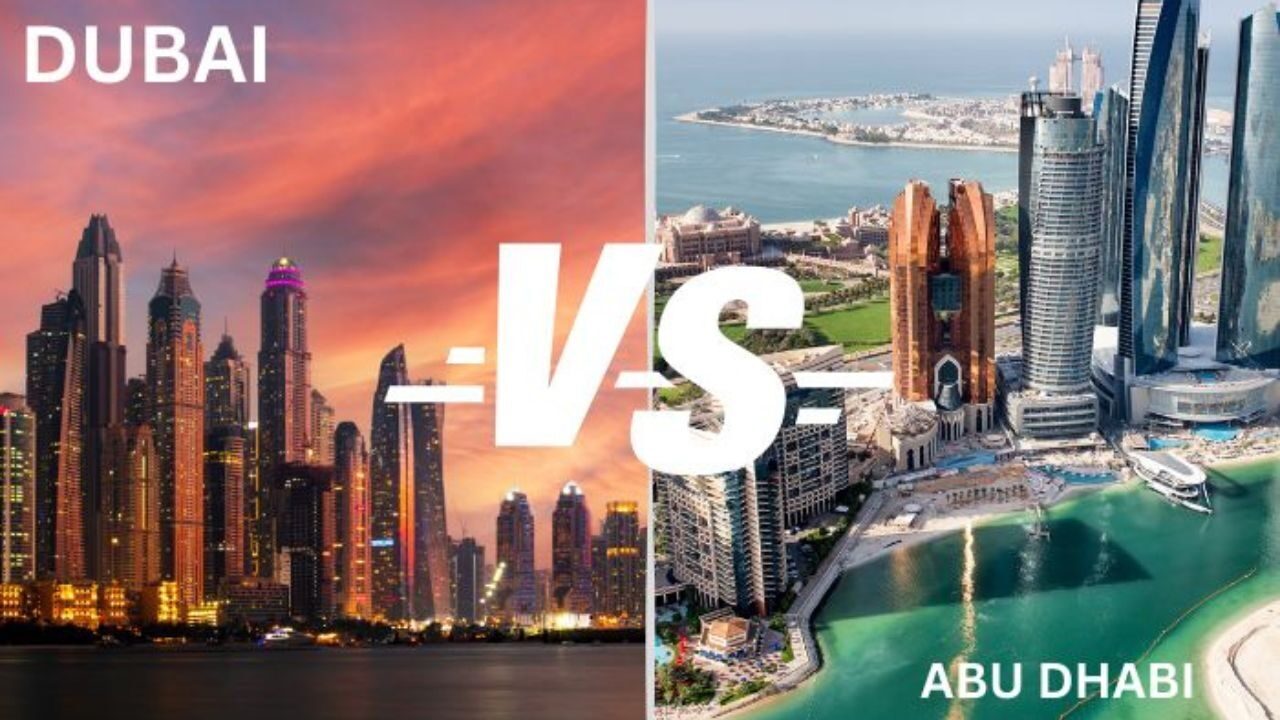
The UAE real estate market offers two powerhouse investment destinations—Dubai and Abu Dhabi. Both cities provide tax-free property ownership, strong infrastructure, and global investor appeal. However, when it comes to property investment in 2026, they serve different investor goals.
If you’re confused about where to invest, this guide breaks down prices, ROI, market trends, and lifestyle factors to help you make the right decision.
Dubai vs Abu Dhabi: Quick Comparison (2026)
| Factor | Dubai | Abu Dhabi |
| Avg Price per Sq Ft | AED 1,900+ | AED 1,780+ |
| Rental Yield | 6% – 9% | 5% – 7.5% |
| Transfer Fees | 4% | 2% |
| Market Size | Large & liquid | Smaller but growing |
| Demand | Very high (global) | Stable, end-user driven |
| ROI Type | High yield & short-term | Stable long-term |
Dubai is slightly more expensive, but offers higher liquidity and rental returns, while Abu Dhabi provides better stability and lower entry costs.
Dubai Property Investment: High Growth & High Demand
Dubai is one of the most active real estate markets in the world. It attracts investors due to its global connectivity, tourism, and business opportunities.
Key Advantages of Dubai
- Higher rental yields (6–9%)
- Strong demand from expats and tourists
- Large number of freehold areas (50+ zones)
- Fast resale and high liquidity
- Strong short-term rental (Airbnb) market
Dubai recorded massive transaction volumes, with over AED 250 billion in Q1 2026 alone—showing its strong investor activity.
Considerations
- Higher property prices
- Higher transaction costs (4% DLD fee)
- Possible short-term price corrections due to oversupply
Best for:
- Investors seeking high rental income
- Short-term or medium-term investment
- International buyers targeting liquidity
Abu Dhabi Property Investment: Stability & Long-Term Growth
Abu Dhabi’s real estate market is more structured, stable, and less volatile compared to Dubai. It is gaining strong traction among investors looking for long-term value.
Key Advantages of Abu Dhabi
- Lower property prices (especially villas)
- Lower transfer fee (2%)
- More spacious properties and master-planned communities
- Growing demand from end-users
- Government-backed economic stability
The market is showing steady growth with rising transaction volumes and controlled supply, making it less speculative.
Considerations
- Slightly lower rental yields (5–7.5%)
- Slower resale compared to Dubai
- Fewer freehold zones
Best for:
- Long-term investors
- Families and end-users
- Buyers seeking capital preservation + steady appreciation
Price Comparison: Dubai vs Abu Dhabi
As of 2026:
- Dubai average property price: ~AED 1,939/sq ft
- Abu Dhabi average property price: ~AED 1,783/sq ft
Key Insight:
- Dubai apartments are slightly more expensive
- Abu Dhabi villas are significantly cheaper
This makes Abu Dhabi more attractive for villa buyers, while Dubai dominates in apartment investment.
ROI & Rental Yield Comparison
Dubai:
- Rental yields: 6% – 9%
- Strong short-term rental income potential
- High occupancy (up to 90%)
Abu Dhabi:
- Rental yields: 5% – 7.5%
- More stable tenant base (families, professionals)
- Lower vacancy risk in residential communities
Conclusion:
- Dubai = higher returns but slightly higher risk
- Abu Dhabi = stable returns with lower volatility
Market Maturity & Risk Level
- Dubai is a mature, fast-moving global market
- Abu Dhabi is an emerging, controlled-growth market
What this means:
- Dubai reacts faster to global trends (both up & down)
- Abu Dhabi grows more steadily with less volatility
If you prefer fast gains → Dubai
If you prefer low-risk growth → Abu Dhabi
Lifestyle & Demand Factors
Dubai Lifestyle:
- Fast-paced, global city
- Business, tourism, nightlife
- Ideal for young professionals & investors
Abu Dhabi Lifestyle:
- Calm, family-oriented environment
- Cultural attractions and waterfront living
- Lower cost of living overall
Lifestyle also affects tenant demand, which directly impacts rental income.
2026 Market Outlook
Dubai:
- Entering a stabilization phase after rapid growth
- High supply may create short-term price adjustments
- Long-term demand remains strong
Abu Dhabi:
- Growing steadily with increasing investor confidence
- Demand rising due to infrastructure and lifestyle projects
- Strong long-term appreciation potential
Final Verdict: Where Should You Invest?
Choose Dubai if you want:
✔ High rental income (6–9%)
✔ Strong resale liquidity
✔ Short-term or mid-term investment
✔ Global exposure
Choose Abu Dhabi if you want:
✔ Lower entry price
✔ Stable long-term growth
✔ Family-oriented investment
✔ Lower risk
Expert Insight
The smartest investors in 2026 are not choosing one—they are diversifying across both markets:
- Dubai → cash flow (rental income)
- Abu Dhabi → capital appreciation (long-term growth)




Join The Discussion