

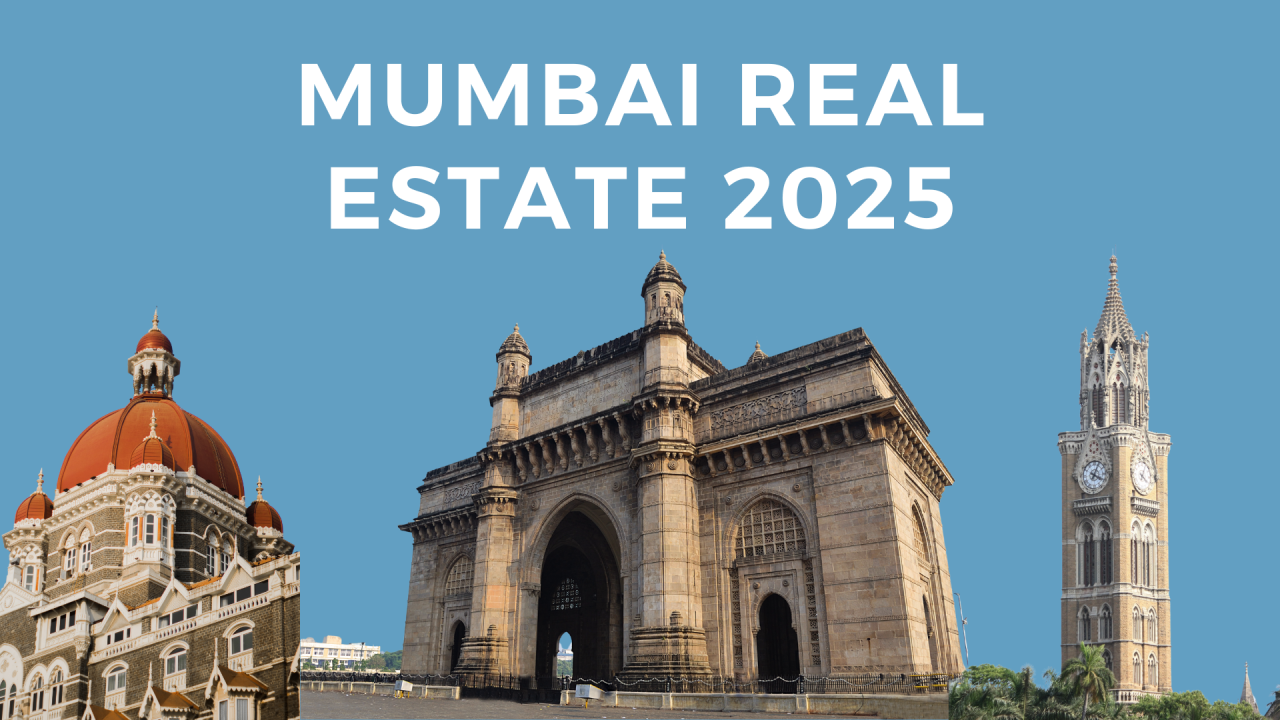
Mumbai — the financial capital of India and the dream city for millions — continues to be one of the most dynamic and high-value real estate markets in the country. From luxury skyscrapers in South Mumbai to emerging suburbs in Navi Mumbai and Thane, the city’s property landscape has witnessed tremendous transformation in recent years.
As we move deeper into 2025, Mumbai’s real estate market stands at a fascinating point — balancing revived demand, premium developments, and infrastructure-led growth. Let’s explore the key trends, price movements, and investment opportunities shaping Mumbai’s property market this year.
1. Renewed Demand Across Segments
After a few sluggish years caused by the pandemic, Mumbai’s real estate sector has bounced back strongly. Residential sales hit record highs in 2024, and this momentum is continuing into 2025.
Several factors are driving this resurgence:
- Stable home loan rates and flexible financing options.
- Preference for spacious homes and improved amenities post-COVID.
- Rising incomes and strong employment growth in finance, IT, and entertainment sectors.
Developers have responded by launching a mix of mid-segment housing projects and ultra-luxury residences, catering to both first-time buyers and affluent investors.
2. Price Trends: Gradual Appreciation
Mumbai’s real estate prices are expected to rise moderately by 6–8% in 2025, following steady growth in 2024. While affordability remains a challenge, the demand in key micro-markets ensures sustained price movement.
Notable Trends by Zone:
- South Mumbai: Premium areas like Worli, Lower Parel, and Mahalaxmi continue to command high prices, with luxury projects seeing renewed interest from HNIs and NRIs.
- Western Suburbs: Bandra, Andheri, and Goregaon are experiencing stable demand driven by corporate professionals.
- Eastern Suburbs: Chembur, Ghatkopar, and Vikhroli are witnessing price appreciation due to infrastructure connectivity.
- Thane & Navi Mumbai: These regions offer affordable alternatives with upcoming metro and highway connectivity boosting capital appreciation potential.
👉 Insight: Investors should watch out for micro-markets near upcoming infrastructure nodes, such as metro lines and coastal road extensions, where appreciation potential is highest.
3. Infrastructure Projects Driving Growth
Mumbai’s infrastructure development remains the backbone of its real estate boom. Several mega-projects under construction or nearing completion are expected to reshape property values and buyer preferences.
Key Projects to Watch in 2025:
- Mumbai Trans Harbour Link (MTHL): Connecting Sewri to Nhava Sheva, this sea bridge will drastically reduce travel time between South Mumbai and Navi Mumbai, boosting investment in Panvel and Ulwe.
- Mumbai Metro Network Expansion: With new lines (2A, 2B, 3, and 7) connecting suburbs to the city core, previously distant areas are becoming viable residential zones.
- Coastal Road Project: Improving connectivity along the western coastline, this will make commuting easier and enhance property demand in Worli, Haji Ali, and Bandra.
- Navi Mumbai International Airport: Expected to be operational soon, it will transform Navi Mumbai into a major real estate hotspot.
👉 Impact: These projects are turning Mumbai into a multi-nodal city, where growth is spreading beyond traditional business districts.
4. Luxury Real Estate Continues to Thrive
Luxury housing is witnessing an unprecedented boom in Mumbai. Developers are catering to ultra-rich buyers and NRIs seeking exclusivity, privacy, and world-class amenities.
Projects in Worli, Bandra, and Mahalaxmi are setting new benchmarks with sea-facing penthouses, private pools, and high-end clubhouses.
Factors driving this trend:
- A surge in NRI remittances and foreign investments.
- A shift in buyer mindset toward quality living and long-term assets.
- Limited land availability in prime zones leading to premium pricing.
Even mid-luxury projects (₹2–5 crore range) in suburbs like Andheri and Powai are seeing fast sales, reflecting buyer confidence in premium real estate.
5. Rise of Sustainable and Smart Homes
In 2025, eco-friendly and tech-enabled homes are becoming mainstream. Developers are integrating:
- Solar energy and rainwater harvesting systems.
- Energy-efficient lighting and appliances.
- Smart home automation with AI-enabled controls.
Homebuyers, especially younger professionals, are increasingly choosing properties that align with sustainability and digital convenience.
6. Commercial Real Estate: A Strong Comeback
Mumbai’s office and retail real estate segments are recovering swiftly.
With multinational companies expanding operations, commercial spaces in BKC (Bandra Kurla Complex), Lower Parel, and Powai are seeing renewed leasing activity.
Additionally, flex spaces and co-working hubs are gaining popularity among startups and SMEs, contributing to steady rental yields of 7–9% annually.
Retail real estate, particularly in malls and high-street areas, is also thriving as consumer spending rebounds.
7. Challenges Ahead
While Mumbai’s outlook remains positive, certain challenges persist:
- High property prices continue to keep first-time buyers on the sidelines.
- Limited land availability restricts large-scale development.
- Regulatory approvals and redevelopment delays still affect project timelines.
- Rising construction costs may push up overall property prices in 2025.
Despite these challenges, steady economic growth and urban expansion continue to support long-term market confidence.
8. Investment Outlook: Where Should You Invest?
For investors, suburban and peripheral areas offer the best combination of affordability and growth.
Consider emerging zones such as:
- Panvel and Ulwe (near MTHL and Navi Mumbai Airport)
- Thane West (growing residential demand and strong infrastructure)
- Mulund and Kanjurmarg (good connectivity to both Western and Central lines)
- Dahisar to Mira Road belt (affordable options and metro access)
These micro-markets are expected to yield 8–12% annual appreciation over the next few years.
Conclusion: Mumbai’s Real Estate in 2025 and Beyond
Mumbai’s real estate market in 2025 is a story of resilience, reinvention, and opportunity.
The combination of large-scale infrastructure projects, evolving buyer preferences, and a vibrant economic base ensures that the city remains a top investment destination in India.
Whether you’re a first-time homebuyer, an NRI investor, or a commercial property seeker, Mumbai offers diverse opportunities across every segment. In short, 2025 is not just another year for Mumbai’s real estate — it’s a milestone in the city’s journey toward becoming a smarter, greener, and more connected urban powerhouse.


Join The Discussion